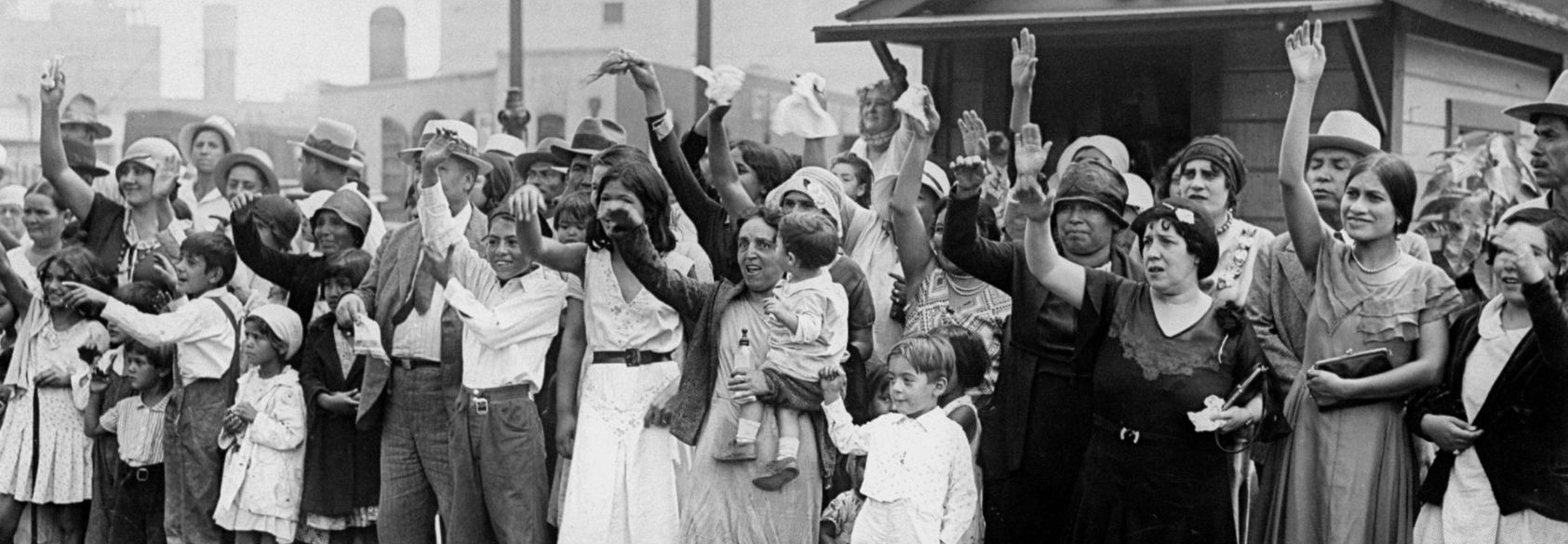
Mexican American families wave goodbye at a Los Angeles train station during the Mexican Repatriation in 1931. Though many were U.S. citizens, more than one million people of Mexican descent were coerced or forced to leave the country during the Great Depression—often under threat of losing jobs or public assistance. Photo credit: NY Daily News Archive
When Prejudice Becomes Policy: Why Teaching Mexican Repatriation History Matters Now More Than Ever
During the Great Depression, over a million people of Mexican descent—many U.S. citizens—were forced out of the country. This blog explores the history of Mexican Repatriation, its lasting impact, and why teaching it is essential today.
Picture this: A mother clutches her three young children as immigration agents surround their Los Angeles neighborhood on Feb. 26, 1931. Her children speak only English, were born in American hospitals, and have never set foot outside the United States. Yet within hours, they're among the 400 people loaded onto trucks at La Placita Park, bound for Mexico, a country as foreign to them as any other. Such scenes played out across the country throughout the 1930s. Years later, photographer Dorothea Lange would capture the anguish of another Mexican mother facing the same impossible choice: "Sometimes I tell my children that I would like to go to Mexico, but they tell me 'We don't want to go, we belong here.'"
This wasn't an isolated incident. During the Great Depression (1929-1939), over 1.8 million people of Mexican descent—60 percent of them American citizens—were deported or coerced into leaving the U.S. It wasn't called deportation then; officials used the gentler term "repatriation." But you can't repatriate someone to a country they've never lived in.
The economic justifications for these mass expulsions proved not only wrong but also deeply harmful. Francisco Balderrama, historian and co-author of Decade of Betrayal, documented how Mexican Americans comprised less than 10 percent of relief recipients. Ironically, their forced departure hurt the economy—repatriated Mexicans withdrew nearly $7 million from California banks alone in 1931. The economic logic collapsed entirely when, just over a decade later in 1942, the U.S. launched the Bracero Program, actively recruiting Mexican workers to address labor shortages during World War II—the very same workers the government had expelled during the 1930s.
Today, as our nation once again grapples with questions of immigration, citizenship and belonging, this history isn't just relevant—it's essential. And yet, most students graduate without knowing this chapter of American history exists.
For today's students, this history offers crucial lessons about how constitutional rights can be suspended during moments of national stress.
Echoes in Our Current Moment
Today, American-born children arrive at school terrified that their parents might not be home when they return. Some face an impossible choice: Stay in the only country they've ever known or follow a deported parent to a place as foreign to them as Mexico was to the American-born children Dorothea Lange photographed in 1935.
Portrait of a Mexican-American child. Imperial Valley, California Photo credit: Dorothea Lange
Current drives for "self-deportation" echo the 1930s playbook. Then, county officials knocked on doors telling families they'd "be better off in Mexico," while threatening to cut relief benefits. Now, aggressive enforcement creates such fear that families contemplate leaving voluntarily rather than risk family separation, while the government promises economic incentives for departure.
In the 1930s, 60 percent of those deported were U.S. citizens. Today, citizenship still cannot shield families from enforcement actions that divide them or force impossible choices. American-born children once again find themselves caught between their birthright and their family bonds, while communities watch neighbors and classmates navigate fear and uncertainty.
To help students analyze these connections thoughtfully, try Project Zero's Same-Different-Gain thinking routine:
Same
What similarities do you notice between 1930s deportation policies and contemporary immigration enforcement? (Consider pressure tactics, treatment of citizen children, community climate of fear, impact on schools and neighborhoods.)
Different
What key differences exist between these two periods? (Consider legal frameworks, civil rights protections, media coverage, public awareness and organized resistance.)
Gain
What deeper understanding do we gain by comparing these two moments? What does this help us better understand about how fear, economic anxiety, and political opportunism can undermine constitutional principles? What might we now be better able to do as engaged citizens and community members?
Why Young People Need This History
For today's students, this history offers crucial lessons about how constitutional rights can be suspended during moments of national stress. [pullquote?] The 14th Amendment promised equal protection under law to all citizens, yet American-born children found themselves exiled from the only home they'd ever known.
This isn't ancient history relegated to dusty textbooks. The trauma rippled through generations. Children forced to Mexico struggled with language barriers, cultural displacement and educational disruption. Many never returned to the U.S. Entire communities were hollowed out, their contributions to American culture and economy erased.
Young people today need to understand how language shapes reality. Officials didn't call it deportation—they called it "repatriation." They didn't acknowledge they were expelling citizens—they characterized everyone as "illegal aliens." This term masked the violation of constitutional rights and made the unthinkable seem reasonable.
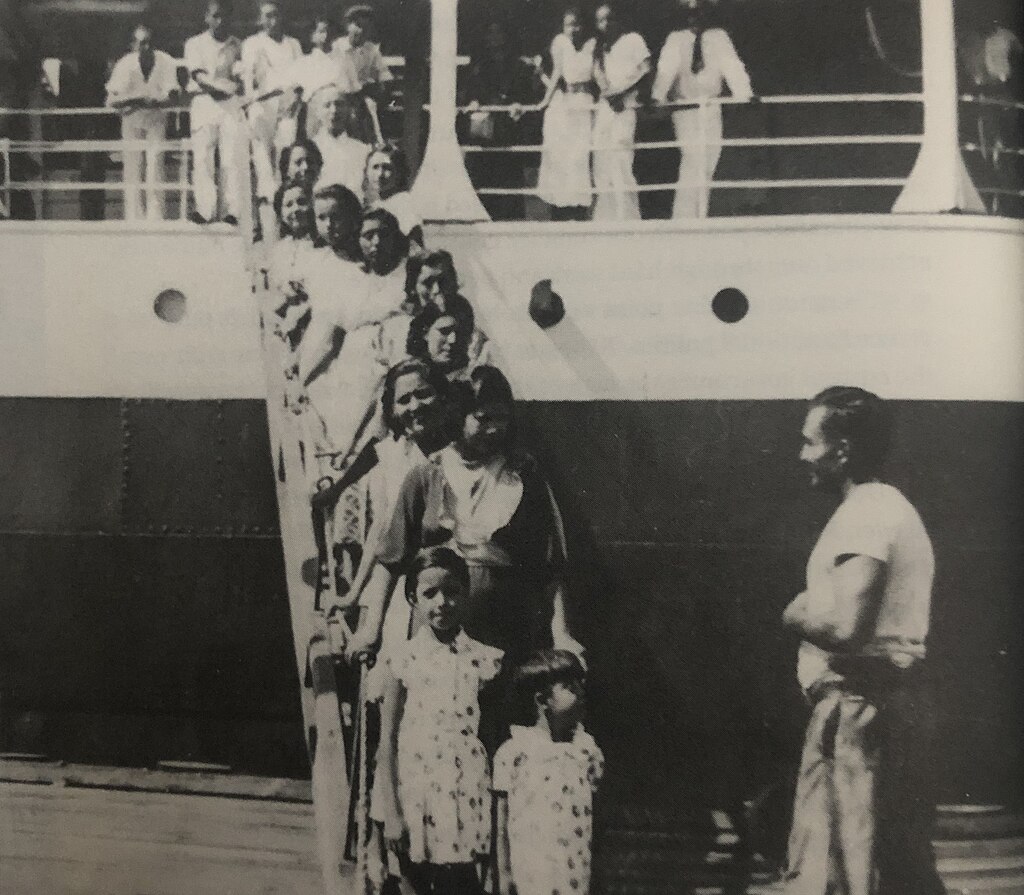
"El Argil" took passengers from San Pedro, California to Baja California, Mexico, in September 1935. Photo credit: Pacific Historical Photograph Collection
The Power of Student Voices
Perhaps most inspiring is how students themselves are fighting to ensure this history gets taught. High schoolers in Los Angeles researched and advocated for Mexican repatriation to be included in curricula. A paper by high school student activist Tamara Gisiger influenced California state senators to pass legislation for a memorial recognizing deportation victims.
These students understood something crucial: Ignoring uncomfortable history doesn't make it go away. It just makes us more likely to repeat it.
Learning from the Past to Shape the Future
Teaching this history isn't about assigning blame or inducing guilt. It's about building critical thinking skills young people need to navigate an increasingly complex world. When they see politicians using economic anxiety to justify targeting specific ethnic groups, they'll recognize the pattern. When they hear euphemistic language designed to obscure harsh realities, they'll know to look deeper.
Most important, they'll understand that citizenship, civil rights and constitutional protections are not self-maintaining. They require vigilance, courage and commitment to justice—even when it's difficult, even when fear tells us to look away.
As immigration debates continue to shape our national discourse, students deserve to understand the full complexity of American history. They need to know that the ideals we hold dear—equality, justice, constitutional rights—have been tested before and sometimes found wanting. They need to know that ordinary people, including people who looked like their neighbors and classmates, have faced persecution despite their citizenship and belonging.
Only by confronting this difficult history can we hope to fulfill America's promise of justice and equality for all. Our students—all our students—deserve nothing less than the truth. And the truth is that this history matters precisely because it's not over. It lives in our laws, our communities and our choices about who belongs in America.
The question isn't whether this history is too difficult or controversial to teach. The question is whether we have the courage to learn from it.
Adam Strom is executive director of Re-Imagining Migration, which leverages educators as pivotal agents of change to advance immigrant-origin young people’s well-being, counter bias and help rising generations develop the critical understanding necessary to build inclusive communities.
Explore Resources on Immigrant Heritage
Share My Lesson is providing innovative and rich ways to recognize all the pieces that make America what it is. Celebrate students, educators, families and communities with these preK-12 resources and lesson plans.
Re-Imagining Migration's mission is to advance the education and well-being of immigrant-origin youth, decrease bias and hatred against young people of diverse origins, and help rising generations develop the critical understanding and empathy necessary to build and sustain welcoming and inclusive... See More