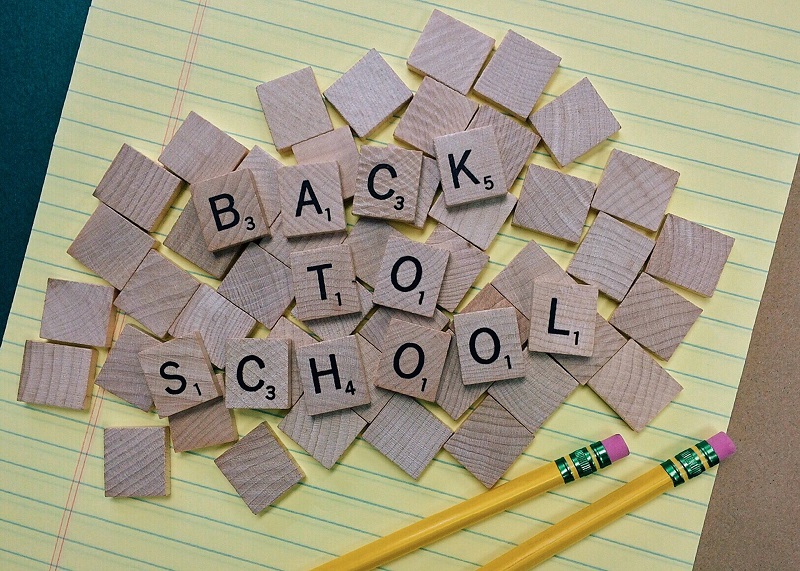
The final countdown to school has begun, and with it comes that crunchy time period of trying to squeeze in full relaxation and total preparation before the school year begins anew.
This will be year two for me, and I am looking forward to the start of school with far less trepidation than I did a year ago. Year one was hard—there's no way around it. But as a recent survivor of my first year, I think I'm in the best position to help this year's newcomers. While veteran teachers are wonderful sources of assistance and support, many seem to have forgotten the particular struggles of first-year teaching that are distinct from the general and never-ending struggles of the profession. For better or worse, these struggles are fresh in my mind, and I'd like to pay it forward by offering some practical advice.
To be clear, the first year is going to be hard. It is educator boot camp. However, understanding how to navigate through your first year can make a big difference. I've included the most important advice I followed (or wish I had followed), and while it is from the context of a high school English classroom, I think it translates into all grades and contexts.
Effective Mindsets
Although it is important to have an appropriate and positive mindset about what you can do during your first year in the classroom, many new teachers forget to bring this same mindset to the things they cannot do. Your job is to be the best first-year teacher you can be.
For this first year, give yourself permission to take shortcuts that are in no way reflective of the educator you will be years down the road. Even though you have already learned so much in student teaching, there is still an incredible learning curve that happens as you jump to full-time teaching. You will learn about a million things a day, and you may have trouble articulating and applying everything. And because you're trying to apply numerous subtle layers to everything you do (planning, grading, seating charts), it will initially slow you down. As a morale booster, constantly remind yourself that schoolwork will take you much longer now, but that this won't always be the case.
Before starting full time, it took me 30 minutes to grade one essay, which is way too slow of a pace once you have 100-plus students. Know that you will adjust, and that you may need to cut corners as you do so. Also, keep in mind that you cannot, nor should not, grade every piece of work each student completes. In fact, for your students to gain the skills you want to teach them, they need to practice them so much that it would be impossible for you to see it all. Pay attention in class to who is engaged, participating and showing evidence of learning, but don't take every assignment as a formative assessment!
Lastly, you should give yourself the gift of a second year. Never work so hard that you'll run screaming from the profession in June. Don't invest 100 percent of your teaching potential in just one year. This is tied to setting limits, and it's something I regularly struggled with, so I've laid out specifics to give a more practical sense of what this actually looks like.
Setting Limits
It's essential to limit the time you spend planning, grading and simply worrying about school. The schedule I arrived at to allow me to keep my sanity was to stop work (notice I didn't say "finish") by 5-6 p.m. each school night, and to only work three hours on the weekend. While I almost always worked past these limits, I still tried to stay as close as possible. The truth is, new teachers could spend every waking moment of every day working and still not be as prepared or accomplish as many things as a more veteran teacher. It's about making balance your highest priority in a way that will sustain you long term. It's important to work hard and have integrity in your work, but you also need to know when to put down your work, shake off the worries and help yourself recharge.
Specific Tips:
- Lesson planning: Try setting a limit of one hour, after which you need to have your lesson mostly planned. Lesson planning is an elastic activity that will always fill up the amount of time you give it. Your lessons don't have to be perfect, just good enough.
- Grading: Limit both the number of assignments you collect and the way you grade them. A friend of mine was told to only grade one assignment a week, and that everything else she collected should be purely based on completion. You can also try using notebooks or packets to organize work and minimize the number of distinct items you collect.
- Essay grading/project grading: When grading any big project, you must set a timer and stick to that limit. For example, if you have 150-plus essays to grade, set a timer for five minutes for each. That still adds up to a whopping 12.5 hours, but that's more doable than 20 or 30 hours! Also, pick one or two categories to evaluate, and focus only on those criteria. This not only will help you appropriately manage your time, but also will help your students learn from any feedback you give.
Strategic Planning
Before school starts, there's a lot of planning to do—and a lot of unknown variables that make it seem nearly impossible: What will your classroom setup be? How large will your classes be? What will your school culture be like? What will be the range in skill level of your students? This is why you need to engage in strategic planning.
- Plan your routines. Come up with routines that will save you valuable time in lesson planning. I did a 15-minute period of sustained silent reading (SSR) three times a week. It was a rich routine, where students did metacognitive logs, reflected on their reading, drew out metaphors, shared their texts and built individual engagement in reading. The benefit to me was that, three times a week, I only had to plan for 45 minutes rather than the full 60-minute period.Try a weekly routine for vocabulary instruction and quizzes, a weekly Socratic seminar, and having dedicated time for subject-matter activities. You can always change up your routine, but time is your most valuable commodity, and planning uses up a lot of it!
- Plan your first week of school (at the very least).
- Plan your units/plan a rough outline for the year. Now I'm going to be honest here: I was not able to do this last year, and it stressed me out the whole year. Your plan doesn't have to be perfect, but have an idea of where you're going!
- Plan your classroom layout: Get into your classroom as soon as possible. Push to make this happen because administrators have a lot to do in August and this could fall through the cracks. Get your key and figure out the seating plan, where students will turn things in, where your own things will go and what will be on the walls.
- Plan your support network: Don't just wait for this to fall into place! Get to know the important staff at your school and figure out who you will be able to turn to for help.
You should also invest a little energy into researching a few important things about your new school that will save you time and energy once the school year begins:
- Find out how your copy machine works, how to clear simple jams, which machine you can use if (when) your copier breaks, where to get replacement paper, what to do if it is out of toner, etc.
- Find out how to sign up for computer labs/laptops at your school, which laptop carts are good and which aren't so great, and the common problems people have with the sign-up system your school uses. TIP: Assign your students a technology number. Every time they get a laptop or go to a computer lab, they'll use the same number. If you make it alphabetical, it will always match your attendance roster, but you may need to switch a couple students around that are too chatty with their name partners.
- Find out how to get basic school supplies from your office/department.
- Find out how to get essential school supplies that your office/department lacks WITHOUT paying for them yourself. TIP: In a welcome email home, send a modest request for tissues, cough drops, etc. And if your school holds a back-to-school night, post sticky notes on the board with the items you need and your name and classroom, so that parents can grab them on their way out. For me, I had a parent who dropped off more than a hundred dollars worth of supplies, and it nourished and nourished my tired September soul.
- Find out how to contact your administration, and see if you can get a phone number to text when you need a fast reply.
- Find out how to get tech support.
- Find out how often your school meets as a full staff, and put the dates in your calendar.
- Find out how to get a sub.
This is by no means an exhaustive list, but as I think back on the past year, these are some of the most important things that stand out. Of course some of the specifics may not work for every new teacher out there, but I've tried to be as explicit as possible because practical advice is extremely valuable yet often hard to find.
It doesn't matter how close it is to the beginning of the school year, or even if you're reading this after your first day—it's never too late to make a positive impact on how this year will go for you. Find the habits and mantras that work for you, and keep working at them. Find validation anywhere you can. And don't forget to ask people for help often. Me included! You can email me at sara.ketcham@gmail.com. Just find some people (more than one) that will support you.
The last thing I have to say is that it's all totally worth it. You have a chance to positively impact so many young thinkers and dreamers. If you help your students become stronger writers, readers or mathematicians, that's great, but also if you can deeply connect with and support your students, if you can help a student who is on the path to drop out of school, then you should feel the greatest sense of accomplishment.
 #5 Blog of the Decade
Discover more of the decade's free, top-rated content and explore the curated collection of our best news stories, blogs, webinars and more!