



U.S. not yet in post-racial society, Dallas pastor says
Essential question - What would it take for a society to be post-racial?
Share
July 12, 2016
Essential question - What would it take for a society to be post-racial?
Share
Essential question
What would it take for a society to be post-racial?
Recent police-related events in the U.S. have many Americans seeking ways to improve racial tensions throughout the country.
Two cell phone videos in the past week showed the lethal shootings of two black men, Alton Sterling in Louisiana and Philando Castile in Minnesota. Then on Thursday, five Dallas police officers were shot to death by African-American gunman Micah Johnson who said he wanted revenge on white officers.
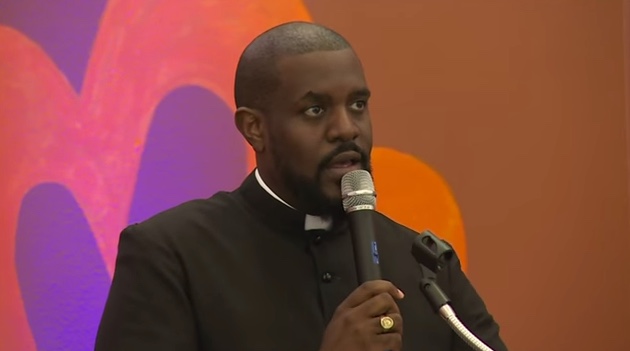
“To see lives taken so callously and brutally — it still has broken our heart,” said Rev. Michael Waters of Dallas’s Joy Tabernacle A.M.E. Church.
Waters said more work needs to be done to improve race relations, violence and poverty. “There is something very wrong in a society when a black man is killed by an interaction with a police every 28 hours,” Waters said.
While Dallas has received praise for its community policing approach which has reduced the number of arrests and excessive use of force in the city, its poverty rate has increased by 40 percent since 2000.
Under such circumstances the situation could have degenerated after the police shootings in Louisiana and Minnesota, according to Jim Schutze, a columnist for the Dallas Observer. Schutze points to Dallas’ effective city leadership in part for keeping the city together.
“We’ve got to be able to support our police officers and protect our civil rights at the same time,” said Mayor Mike Rollins.
Key terms
community policing — the system of assigning police officers to particular areas so that they become familiar with the local inhabitants and are ideally able to build better relationships and trust
post-racial — denoting or relating to a period or society in which racial prejudice and discrimination no longer exist