



About This Lesson
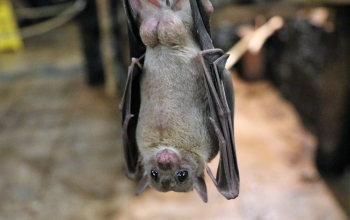
It seems that fruit bats have taken a page from modern day military surveillance. National Science Foundation-funded scientists at Johns Hopkins University, partnering with collaborators at the University of Washington, believe that the fruit bat can simply click its tongue at different positions within its mouth and produce signals in different directions without moving its head or mouth. Instead of pointing all sound energy in one direction, fruit bats produce sound waves that point in different directions at different frequencies to create a sharper image -- similar to how today's frequency-scanning sonar would act. The team thinks their results, when combined with the bats' highly adaptive sonar behavior, could inspire new directions for driverless cars and drones.