


Community Building and the Significance of Public Art
Essential question: Why is public art important to a community?
Share
August 16, 2019
Essential question: Why is public art important to a community?
Share
Educators from across the country dove into the world of youth media-making in late July as part of PBS NewsHour Student Reporting Labs’ (SRL) four-day broadcast training workshop in Arlington, Va. Attendees created the following short current events lessons based on SRL’s latest video series, “Art in Real Life,” about the significance of public art in local community building.
Watch the Student Reporting Labs compilation video below on “Art in Real Life.” Then have students choose one or two (or more!) of the videos below and answer the discussion questions.
Craig Hein’s “Vibrancy” sculpture is another addition to the tens of guitar statues around Austin. The guitars reflect the unique flavor that fits the local character.
Produced by PBS NewsHour Student Reporting Labs in Westwood High School in Austin, Texas.
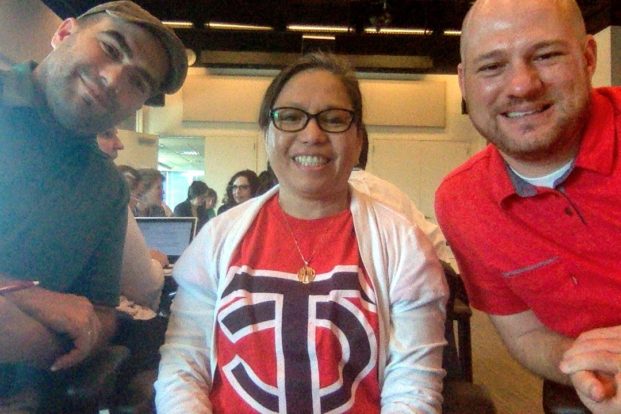
Lesson by Leigh Walters, (Hall High School, Little Rock, Arkansas); Mary Dunn (EC3/College and Career Center, Elizabethtown, Kentucky); Isabel Espinoza, (Pease Communications and Technology Academy, Midland, Texas); and Kent McCutcheon, Antioch High School, Antioch, CA)
Honey Art Cafe encourages young artists to pursue their passions.
Produced by PBS NewsHour Student Reporting Labs at Jersey Village High School in Houston, Texas.
Local artist, Harry Bachman, donated a 30-foot statue to his local high school where students were then given the opportunity to personalize the statue.
Produced by PBS NewsHour Student Reporting Labs at Caesar Rodney High School in Camden, Delaware
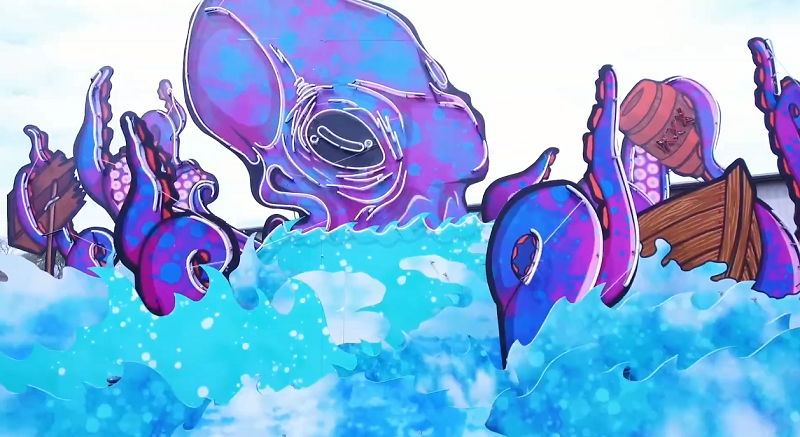
The 1000 Mermaids Artificial Reef Project & Gallery of 1000 Mermaids is a massive public EcoArt project which aims to revitalize and replace vanishing reef populations as well as support marine life. The artificial reef installation will also serve as an underwater eco-friendly destination for tourism and research.
Produced by PBS NewsHour Student Reporting Labs at Pine Crest School in Florida with station support from South Florida PBS.
Lesson by Gavin Bernard (re:imagine/ATL, Atlanta, GA); Nikki Vrandenburg (Montana PBS, Bozeman, MT); Darcy Bakkegard (Prairie Public Broadcasting, Fargo, ND); Sarah Oberholtzer (Free Spirit Media, Chicago, IL)
Discussion questions:
1. Essential question: What impact has public art made on this community?
2. What role do artificial reefs serve for marine ecosystems?
3. How does the use of visually appealing art change the impact of the project?
4. How can STEAM courses help solve global issues?
5. Media literacy: Whose perspective isn’t represented in this story?
Sculptor Dale Whistler created a sculpture that can withstand 100-mph winds.
Produced by PBS NewsHour Student Reporting Labs at Westwood High School in Austin, Texas.
Lesson by Christopher Harper (Rising Starr Middle School, Fayetteville, GA); Michelle E. Dyer (Surrattsville High School, Clinton, Maryland); Sara Jones (Titusville High School, Titusville, PA)
Discussion questions:
1. Essential question: How might art help change our preconceived notions about the people who live in our communities?
2. Why did Whistler choose bats as the subject of his sculpture?
3. How did the artist address the wind issue in Austin with his sculpture? How can art teach students about weather science?
4. Media literacy: What additional questions would you ask Whistler about the development happening in the area and how it prompted the sculpture?
Knox-ill is a collective of graffiti artists that work with business and building owners to conduct large-scale public artworks.
Produced by PBS NewsHour Student Reporting Labs at Smoky Mountain Youth Media in Knoxville, Tennessee.
Lesson by Kristyn Bomberg from WGVU Public Media in Grand Rapids, Michigan; Benjamin Garcia from Southern Oregon Public Television in Medford, Oregon; and Ryan Hendricks from Wisconsin Public Television from Madison, Wisconsin.
Discussion questions:
1. Essential question: What value might graffiti bring to the public square?
2. What is the difference between graffiti and a mural? What makes graffiti different from traditional art pieces created through traditional mediums?
3. Does the meaning of graffiti change if permission is acquired, thus making it legal?
4. What motivates a graffiti artist to engage in this particular medium? How does commercialism affect the perception of graffiti?
5. Media literacy: Who else would you like to interview for this story?
This mural in downtown Raleigh, North Carolina, is one of the world’s only augmented reality murals.
Produced by PBS NewsHour Student Reporting Labs at Middle Creek High School in North Carolina, with station support from UNC-TV. Learn more how SRL’s public art series appeared on Instagram here.
Lesson by Justin Deutsch (The LINC, Philadelphia, PA); Ethan Calk (Communications Arts High School, San Antonio, Texas); Nancy Zubiri (Venice High School, Venice Beach, CA) and Zach Liniewski (WGVU Public Media, Grand Rapids, MI)
Discussion questions:
1. Essential question: What is the impact of using social media to tell stories?
2. Write a definition for augmented reality in your own words.
3. Compare this experience to looking at a traditional mural. Which would you prefer to view and why?
4. Do you think it’s acceptable to require an observer to use a piece of technology to view a work of public art? How about privately-commissioned art?
5. Media literacy: Why do think the producers chose to shoot this story on a phone instead of a traditional camera? What were the positives and negatives of this format?
Osiris Rain is the muralist behind Charlotte, North Carolina’s most iconic and Instagrammable spots, but his artistic path started in conflict with the city.
Produced by PBS NewsHour Student Reporting Labs at Fort Mill High School in Fort Mill, South Carolina.
Lesson by Karin McKemey (Fort Mill High School, South Carolina); Jody Sandru (Twin Bridges High School, Montana); and Tim Shelton (Saint Francis International, Maryland)
Discussion questions:
1. Essential question: In what ways is public property open for artistic presentation?
2. Should artists be able to use any space as their canvas without permission? Explain.
3. Describe the difference between graffiti and art.
4. Media literacy: How did sound impact this story?
From the Arctic to the nation’s capital, penguins mimic everyday rush-hour commuters in this iconic Silver Spring, Maryland, mural.
Produced by PBS NewsHour Student Reporting Labs at John F. Kennedy High School in Maryland with support from SRL producers Kristy Choi, Briget Ganske and Rawan Elbaba
Extension activity:
Check out this daily news story from Extra, “12 news stories that make STEM meaningful for students” all written by Texas teachers and based on PBS Student Reporting Labs and NewsHour’s top science stories.
This article was originally posted by PBS NewsHour Extra's Student Reporting Labs and can be found here.