


New Innovations: The Students Solving Real-World Problems
Essential question: Should more schools have invention programs to teach students how they can make a difference in the world?
Share
September 18, 2019
Essential question: Should more schools have invention programs to teach students how they can make a difference in the world?
Share
Students and New Innovations
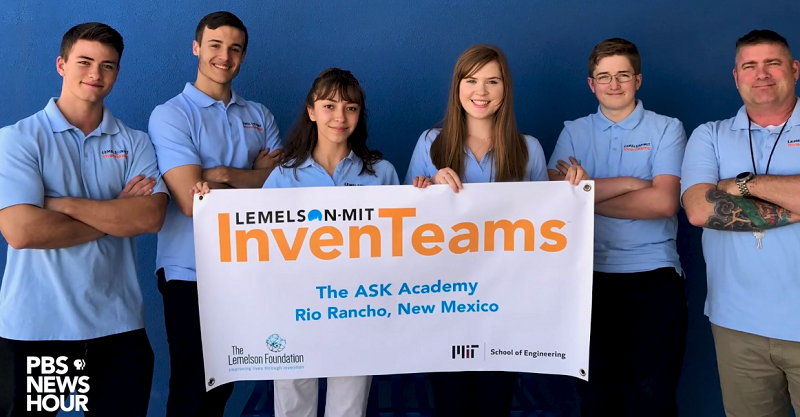
This past June, student inventors from across the country attended Lemelson-MIT’s Eurekafest, a week-long celebration of the power of invention, at the Massachusetts Institute of Technology in Cambridge, Mass. Lemelson-MIT gets its name from the world-renowned university where it is located and Jerome Lemelson, an engineer and inventor who held more than 600 patents. Read the summary, watch the video below and answer the discussion questions.
Each of the 15 “InvenTeams,” as they are called, had received a grant of up to $10,000 the previous school year. For a whole school year, students designed and redesigned their invention to get it just right. At Eurekafest, teams get to meet students from other schools, participate in a host of invention activities and showcase their invention. During the presentations, students explained step-by-step how their invention works and how it solves a real problem.
So, how does inventing work? Students engage with the ‘invention process,” which involves identifying a problem, brainstorming solutions, designing a prototype, testing it out before redesigning and finally sharing the idea with stakeholders and pitching it to potential investors. Students at R2i2 (Richland Two Institute of Innovation) in Columbia, South Carolina, have a patent pending through the U.S. Patent and Trademark Office on their invention which provides solar energy to small appliances.
Students of all ages can be inventors, according to Doug Scott, engineering teacher at Hopkinton High School in Hopkinton, Mass. Scott advises new Lemelson-MIT InvenTeam teachers after his own students received a Lemelson-MIT InvenTeam award in 2013. A few years later, their invention was awarded U.S. Patent US9511833B2. You can look it up here to find out what they invented!

1) Essential question: Should more schools have invention programs to teach students how they can make a difference in the world?
2) What role does empathy play in how inventors go about their work?
3) If given a full school year to work on a project with your classmates, what invention would you like to create?
4) What do you think were the different individual roles involved in both teams’ inventions? Why is it a good skill to be able to work well with others, especially in inventing?
5) Media literacy: Who else would you like to have heard from in the story? What questions would you ask them?

This article was original published by PBS New Hour Extra and can be found here.