Read the news summary, watch the video and answer the discussion questions. The video has been edited for length. To watch the video in its entirety or read the transcript, click here.
As thousands of new construction and oil workers enter states along the Keystone XL pipeline route in the midst of the COVID-19 pandemic, legal challenges are once again piling up against the Trump administration.
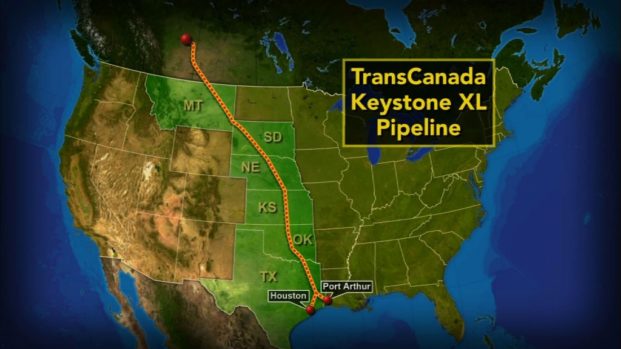
The company building the pipeline, TC Energy Corporation, announced it had secured more than a billion dollars to continue with construction of the 1,200 mile Keystone XL Pipeline. The Trump administration included construction of oil pipelines in federal guidelines for work considered to be essential during the COVID-19 pandemic.
Local hospital officials have raised concerns that the influx of out-of-state workers will contribute to the spread of coronavirus. Many small, rural hospitals aren’t equipped to handle a large influx of patients.
In April, the Indigenous Environmental Network became one of one many environmental and Native American rights groups to file a joint lawsuit against the Trump administration for reapproving the Keystone XL Pipeline without conducting environmental reviews that federal courts had previously ordered. The pipeline had been halted by the Obama administration in 2015 partly over environmental concerns.
Keystone XL’s president Richard Prior argues that the company has made adjustments to work plans in consideration of COVID-19. “Construction will only take place after giving consideration to the safety of our people and their families and for those in the surrounding communities,” Prior said.
Keystone XL Pipeline Discussion Questions
Essential question: Why are oil pipeline projects contentious?
Why are Native American groups resisting the installment of the Keystone XL Pipeline?
What does it mean for local communities to push back against federally-approved projects that may harm their communities?
Read the quote by Jeanne Crumly whose family has run a farm and cattle ranch in Nebraska for five generations. Do you agree with Crumly’s argument? Why or why not? “If our children can’t go to school. If our children can’t swing on the swings in the park. And in the midst of all of that, then a foreign company can send whoever they want on the land we pay taxes on. How can they do all the things that we don’t, when we’re the land owners and we’re the community members?”
Media literacy: Check out at least three other news outlets (i.e. Washington Post, FOX News, Wall Street Journal, Democracy Now!, Buzzfeed) to see how they reported the Keystone XL Pipeline restarting construction. Do these articles mention COVID-19 health risks or environmental concerns? How do these different news sources convey these concerns differently, if at all?
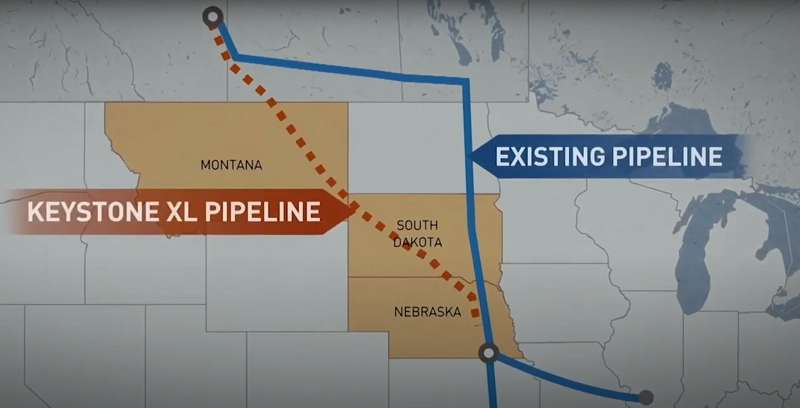
Graphic by PBS NewsHour
Extension Activity
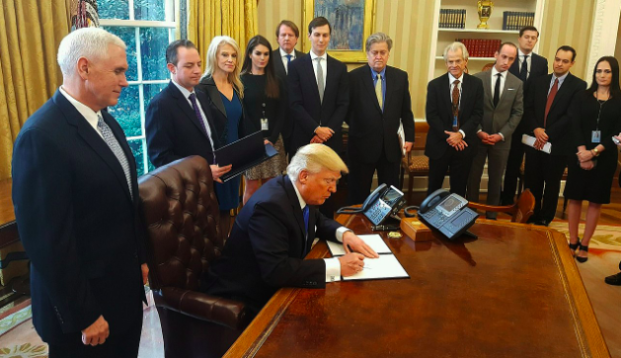
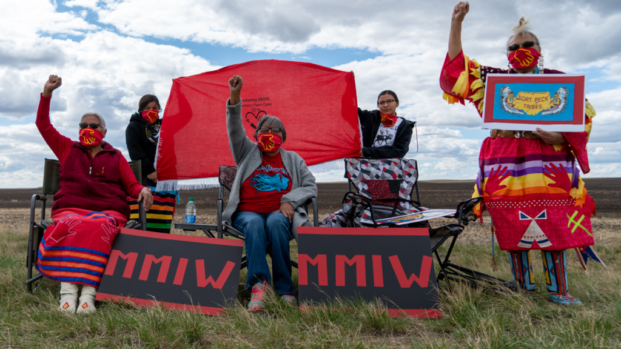
Take a look at the photograph of President Donald Trump signing the Presidential Memoranda to advance the construction of the Keystone XL and Dakota Access pipelines on January 24, 2017. Then take a look at the photograph showing protests by Native American rights activists over health concerns that the Keystone XL Pipeline project poses to local communities.
Photo via Donald Trump’s Twitter account
Native American rights’ group protests over construction of the Keystone XL Pipeline. Via PBS NewsHour
Ask your students:
What do you notice first in both photos?
What facial expressions do you see?
What can you learn from a photograph that you may not be able to learn from a news article?
Which individuals or groups did this memoranda most effect?
If you were one of the people affected by construction of the pipeline, how would you feel seeing these photos?
PBS News Hour Classroom helps teachers and students identify the who, what, where and why-it-matters of the major national and international news stories. The site combines the best of News Hour's reliable, trustworthy news program with lesson plans developed specifically for... See More