



Visit PBS NewsHour Extra for more education resources designed to help teachers and students identify the who, what, where and why-it-matters of the major national and international news stories.
Essential question
How is the concept of news changing and how can you be sure that the news you consume is true?
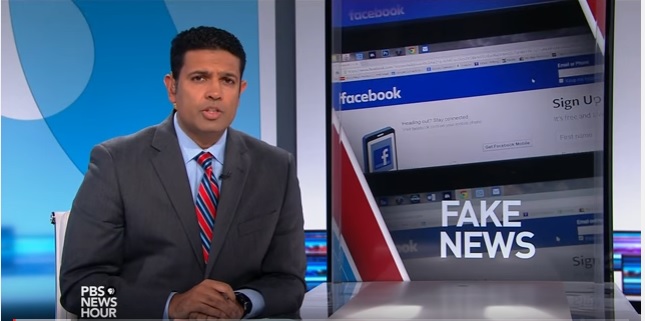
The proliferation of fake news sources on social media has raised questions about the duty of sites like Facebook and Twitter to screen content and distinguish fact from fiction.
Throughout 2016, false stories about the election were widely circulated by a variety of websites purporting to be legitimate. An analysis by Buzzfeed News revealed that many of these stories actually received more engagement — measured by the total number of comments, reactions and shares an article receives online — than those from real news sites like The New York Times and The Washington Post.
Buzzfeed reporter Craig Silverman and his colleagues compared the top 20 fake news articles from the three months leading up to the election to the top 20 from actual news sites and found that engagement was much higher for the fake sources than the real ones.
“To see that the leading fake news site getting the most engagement had only been registered months before, and its top four fake stories got more Facebook engagement than the top four election stories from The Washington Post, I mean, that was really surprising,” Sullivan said.
In addition, the Buzzfeed team found more than 100 fake news sites focused on the U.S. election were being run out of a small town in the Balkan nation of Macedonia and that virtually all were publishing articles favorable for President-elect Donald Trump’s campaign.
The extent to which false news impacted the presidential election is unclear. Some people say sites like Facebook and Twitter need to do more to identify untrustworthy sources. President Barack Obama raised concern over the role of fake news while in Germany Thursday.
“If we are not serious about facts and what’s true and what’s not … if we can’t discriminate between serious arguments and propaganda, then we have problems,” the President said.
Key terms
propaganda – ideas or statements that are often false or exaggerated and that are spread in order to help a cause, a political leader, or a government
algorithm – a step-by-step procedure for solving a problem or making a decision, especially by a computer
echo chamber – any forum for communication in which all members agree with everyone else

PBS News Hour Classroom helps teachers and students identify the who, what, where and why-it-matters of the major national and international news stories. The site combines the best of News Hour's reliable, trustworthy news program with lesson plans developed specifically for... See More
Advertisement