




Essential question
What are some problems with the current presidential election process?
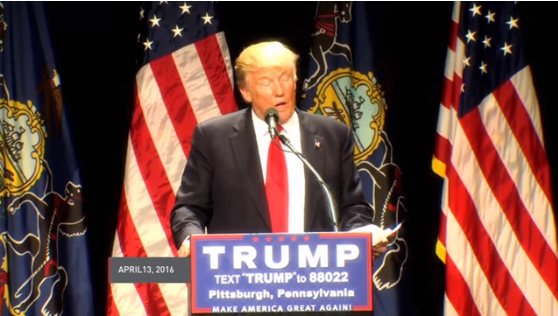
As the primary season starts to draw to a close, the likelihood that the Republican’s presidential candidate will be contested at July’s National Convention in Cleveland increases.
Although Donald Trump maintains a strong delegate lead, and may have the highest number of delegates, he could enter the convention without having won enough delegates to gain the nomination on the first ballot. This is called a brokered or an open convention—the first such convention in at least four decades.
If Trump can pick up enough delegates to commit to him, that is, 1,237 votes, he’d be the nominee, according to Reince Priebus, chairman of the Republican National Committee. If he doesn’t, then there will be more rounds of voting until a candidate reaches the majority of delegates.
On the Democratic side, there is the issue of superdelegates, or unelected delegates who are free to support any candidate for the presidential nomination at the party’s national convention. Superdelegates are Democratic Party leaders, all members of the U.S. House and Senate and sitting governors who receive an automatic convention vote. So far they’ve mostly gone to Hillary Clinton, giving her a significant overall delegate lead, much to the frustration of some of Sen. Bernie Sanders supporters.
The Electoral College is another confusing aspect of the U.S. electoral process. Nearly all states base electoral votes on a winner-take-all system, with the exception of Nebraska and Maine, which rely on a system of proportional representation. Vice President Al Gore lost the presidency to Texas Governor George W. Bush in 2000 after losing the Electoral College vote. Gore had won the popular vote by about 500,000 people—making it the fourth such occurrence in U.S. history.
Key terms
winner-take-all – the candidate who wins the most votes wins all the delegates at stake (used more in Republican primaries)
proportional representation – the candidate receiving a percentage of the votes above a predetermined number is entitled to at least one delegate (used more in Democratic primaries)
delegate – a representative to a convention or conference
unbound delegate – a person who must vote for a certain candidate at the national nominating convention
bound delegate – a person who is free to vote their preference at the national nominating convention
brokered convention – closely related to but not the same as a contested convention; a situation after the first vote for a political party’s presidential candidate at a national convention in which no single candidate has received a majority of delegates using the pledged delegates from the primaries
contested convention – a more modern term for a convention in which no candidate secured a majority, but the role of party leaders is weaker in determining the eventual outcome

PBS News Hour Classroom helps teachers and students identify the who, what, where and why-it-matters of the major national and international news stories. The site combines the best of News Hour's reliable, trustworthy news program with lesson plans developed specifically for... See More
Advertisement