



Visit PBS NewsHour Extra for more education resources designed to help teachers and students identify the who, what, where and why-it-matters of the major national and international news stories.
Essential question
Why is it important to remember the legacy of world leaders?
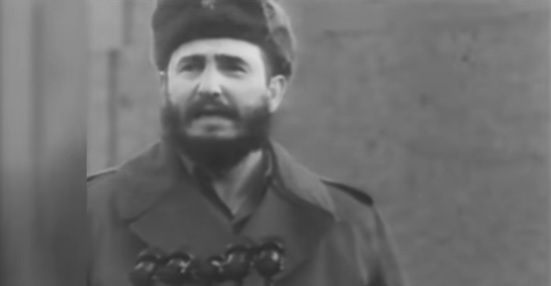
Fidel Castro, the 90-year-old communist leader of Cuba, died Friday after ruling the country with a firm grip for nearly half a century, withstanding decades of economic embargo from the United States and multiple assassination attempts.
Castro took control of Cuba on January 1, 1959, after toppling right wing dictator Fulgencio Batista. Castro quickly nationalized U.S.-owned companies and property in Cuba, along with church holdings and businesses of middle class and wealthy Cubans. The U.S. responded with an economic boycott that lasted until recently.
The hardships placed upon the Cuban economy and Castro’s repression of political opposition sparked a series of mass migrations to the U.S. While Castro’s supporters praise him as a champion of anti-imperialism, critics view him as a dictator who oversaw human rights abuses and weakened the country’s economy.
Tensions between the U.S. and Cuba reached their height in the 1960s with the failed U.S.-backed invasion at the Bay of Pigs. The incident eventually led to a tense confrontation between the U.S. and the Soviet Union, known as the Cuban Missile Crisis. Castro blamed the U.S. for nearly escalating the situation into full-scale nuclear war.
“It was the United States that initiated the blockade, that organized the invasion, the sabotage, the pirate attacks, the mercenary invasion and those that spoke of an invasion against Cuba,” Castro said in a 1985 NewsHour interview.
In 2006, Fidel Castro developed a serious intestinal illness and his younger brother, Raúl Castro eventually took over power. Since then, relations have improved between the U.S. and Cuba. In December 2014, President Obama announced the U.S. would re-establish diplomatic ties with Cuba.
Key terms
guerilla — a member of a small independent group taking part in irregular fighting, typically against larger regular forces
embargo — an official ban on trade or other commercial activity with a particular country
human rights — the basic rights and freedoms to which all humans are considered to be entitled, often held to include the rights to life, liberty, equality and a fair trial, freedom from slavery and torture and freedom of thought and expression

PBS News Hour Classroom helps teachers and students identify the who, what, where and why-it-matters of the major national and international news stories. The site combines the best of News Hour's reliable, trustworthy news program with lesson plans developed specifically for... See More
Advertisement