



About This Lesson
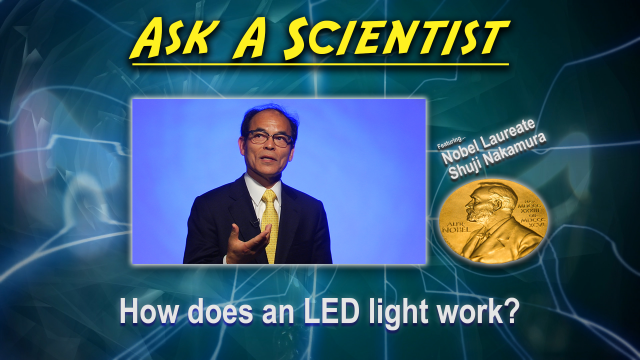
Shuji Nakamura, an electrical engineer at the University of California, Santa Barbara who won The Nobel Prize in Physics in 2014, gave a 2018 Engineering Directorate Distinguished Lecture at the National Science Foundation. Nakamura specializes in semiconductor technology, which led to his development of the efficient blue light-emitting diode (LED) in 1993, after years of fundamental engineering research.
The blue LED was the last, most difficult LED color to develop in order to create white LED light, which is now used in smartphones, computers and television screens. LED light is created when semiconductors are activated and emit light – the blue LED required the semiconductor gallium nitride.
Nakamura’s research is an example of an engineering feat that has decreased energy use worldwide.