



About This Lesson
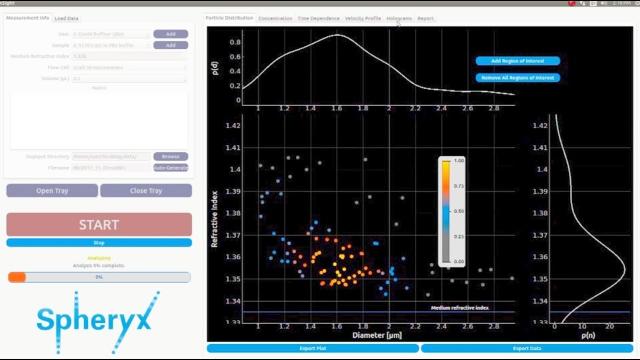
Spheryx Inc., a small business funded by the National Science Foundation (NSF), created a technology to monitor, count and characterize microscopic particles in a variety of fluids, such as water, chemicals or even pharmaceuticals. The Food and Drug Administration has identified groupings of proteins, called protein aggregates, as a significant safety hazard for biologic pharmaceuticals, which are widely considered the most promising class of new drugs. Protein aggregates are very hard to detect, and ingesting them can lead to severe immune reactions, sometimes even to death. Spheryx's technology can detect, monitor and characterize protein aggregates suspended within pharmaceutical products, leading to safer products for the consumer and reduced manufacturing cost for the manufacturers. The technology is based on holographic video microscopy, which uses a microscope with laser light to create holograms of particles within cells. The holograms encode the 3-D information about the particles, and Spheryx extracts information to determine whether there are protein aggregates in the sample. Spheryx is supported by America's Seed Fund powered by NSF, a $200-million program that awards research and development grants to small businesses and startups, transforming scientific discovery into products and services with commercial and societal impact. To learn more, visit: https://seedfund.nsf.gov/.
Provided by National Science Foundation