


About This Lesson
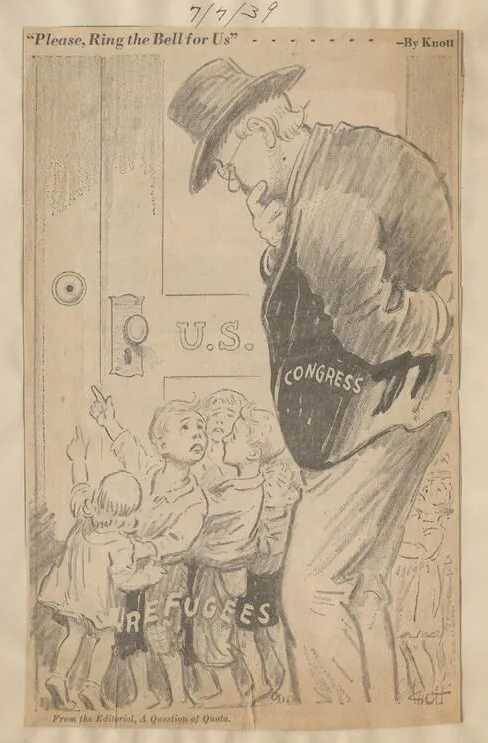
SOCIAL STUDIES – Students will learn about the ways in which the United States and other Western countries were unwilling to open their borders to Jewish refugees from Germany and other European countries with Hitler’s advances.
Learning Objectives
- Students will learn about the historical context of the Jewish refugee crisis and 1930s America
- Through oral history, students will learn the personal story of one boy’s journey escaping Czechoslovakia one day before the Nazi’s took over
- Using a lesson plan The Child Refugee Debate by Facing History and the Holocaust Museum, students will consider the Wagner-Rogers Bill and the competing ideas in the United States about national identity, priorities and values
Common Core Education Standards (9-12)
- RH2 – Students conduct inquiries that require analysis of documents to answer their questions and/or support a thesis (claim).
- RH6 – Evaluate authors’ differing points of view on the same historical event or issue by assessing the authors’ claims, reasoning, and evidence.
- RH7 – Integrate and evaluate multiple sources of information presented in diverse formats and media (e.g., visually, quantitatively, as well as in words) in order to address a question or solve a problem
- Find additional Common Core Standards for teaching the Holocaust here.