


About This Lesson
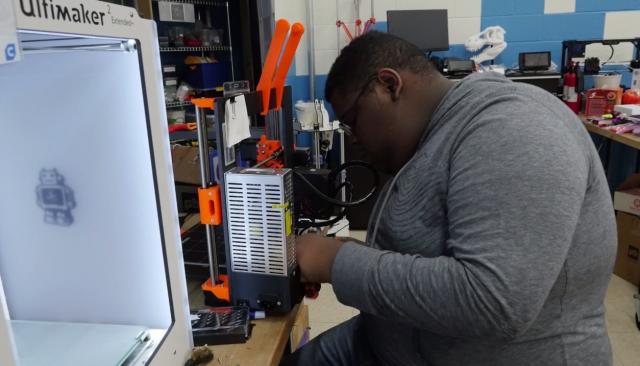
Real-world problem-solving through "making" is a new and popular way to engage youth in Science, Technology, Engineering and Mathematics education, frequently in after-school programs. Unfortunately, not all youth are able to participate in after-school activities due to financial pressures and may instead take jobs in non-technical fields, such as food service or retail. These non-technical jobs take time away from making, designing and tinkering, which can leave them behind peers who are honing skills for a technical career path. With support from the National Science Foundation, Amy Hurst and her team at the University of Maryland, Baltimore County, partnered with the Digital Harbor Foundation to create a living laboratory print shop to study the impact of maker employment on underserved youth.