



About This Lesson
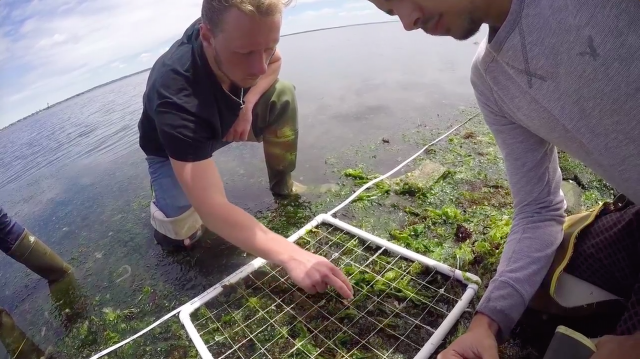
When the water along Rhode Island's Narragansett Bay is thick and green, it may be a bad day for a swim, but it's an excellent day for University of Rhode Island marine ecologist Carol Thornber. With support from the National Science Foundation (NSF), Thornber and her team are conducting a long-term study of the impacts of climate change on macroalgae, or seaweed, and algal blooms. Thornber has been studying marine life in this particular stretch of Narragansett Bay for more than a decade. She's investigating how the blooms affect fish stocks and oyster beds, as well as how nutrients in the water from sewage treatment and agricultural runoff can feed the blooms and make them larger. The research is also focusing on what causes algal blooms and how their formation could be predicted and limited in the future. Rhode Island's NSF Established Program to Stimulate Competitive Research (EPSCoR) conducts groundbreaking research and develops academic talent in the science and technology fields to increase competitiveness in research and development, building a more capable workforce and fueling economic growth in the Ocean State. The research in this episode is supported by NSF award #1004057, Infrastructure to Advance Life Sciences in the Ocean State.