




About This Lesson
Thinkalong.org is a free, evidence-based interactive tool for students to develop media literacy skills by applying the 5 Key Questions of Media Literacy to public media content. Importantly, the tool does not require registration for teachers or students, abides by student privacy laws, and is advised by a board of both youth and educators.
Each module consists of:
-
a compelling and timely question;
-
related current and age-appropriate public media content including audio, video, and text;
-
extension resources for advanced or highly-interested students;
-
student graphic organizers;
-
a simple debate tool;
-
a teacher's guide to the module;
-
and a guide to the 5 Key Questions of Media Literacy.
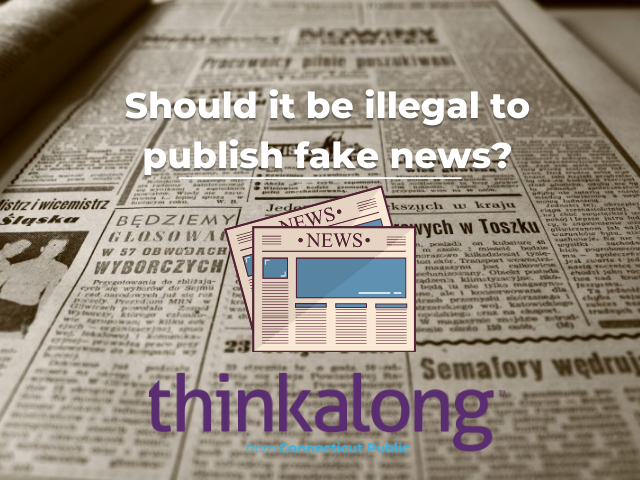
This Teacher's Guide supports the Should it be illegal to publish fake news? module on thinkalong.org. Here is the full module and below is a summary.
Fake news is a false story that looks like news and it's spread across the internet. It's usually created to influence political views or it's made as a joke, but it can also be dangerous. After the 2016 presidential election, more people are talking about fake news because it may have influenced voters' decisions.
To use this module with learners in any setting, we recommend using one of the structured discussion formats outlined at thinkalong.org/structuring-discussions. You can find options for a small or large group, so that all students or just a few participate, and examples of some discussion formats.