

lesson
14 Downloads
Write a review
beta
EdBrAIn It
EdBrAIn uses AI to customize lesson resources for your students’ needs.

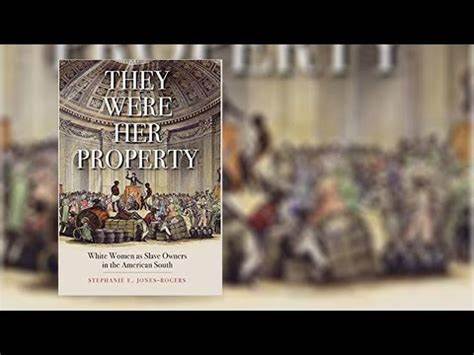
THEY WERE HER PROPERTY: WHITE WOMEN SLAVE OWNERS IN THE AMERICAN SOUTH

Share

Share On Facebook
Share On Twitter
Share On Pinterest
Share On LinkedIn
Email
Grade Level Grade 11
Resource Type Lesson Plan, Presentation
Standards Alignment
State-specific

About This Lesson

ESSENTIAL QUESTION:

WHY DO WE NOT VIEW WHITE WOMEN AS ACTIVE PARTICIPANTS IN THE PERPETUATION OF AMERICAN SLAVERY AND WHITE SUPREMACY?

Objectives:  SWBAT analyze, evaluate, source and annotate excerpted primary and secondary source complex texts regarding white women as active participants in slavery and white supremacy toward skill building for the long-extended essay portion of the AP American History.

Citations:

BOOK:  Jones-Rogers, Stephanie (2018) They Were Her Property:  White Women As Slave Owners In The American South.  New Haven:  Yale University Press.

WARM UP:

https://www.mountvernon.org/george-washington/

VIDEO:  ‘They Were Her Property:  White Women As Slave Owners in the American South’ – Rising Up With Sonali  (12minutes)

https://vimeo.com/318317564

Resources

Files

beta
EdBrAIn uses AI to customize lesson resources for your students’ needs.

LESSON PLAN - THEY WERE HER PROPERTY 2019.docx

Lesson Plan
February 13, 2020
1.23 MB
beta
EdBrAIn uses AI to customize lesson resources for your students’ needs.

Discussion Rubric.docx

Presentation
February 13, 2020
8.75 KB
Videos
They Were Her Property: White Women as Slave Owners in the American South
Remote video URL

Standards

The economic, political, social, and educational experiences of formerly enslaved African-Americans
Economic and technological impacts of the Civil War
Life under slavery (slave laws; material conditions of life; women and children ; religious and cultural expression; resistance)
Students will examine the market revolution, including technological developments, the development of transportation networks, the growth of domestic industries, the increased demands for free and enslaved labor, the changing role of women, and the rise of political democracy.

Reviews

Write A Review

Be the first to submit a review!

Advertisement